 Daily Pet Care Hub
Bengal Cat Breed Guide
By Pet Mama · Published 2025-08-12 · Updated 2026-08-31 · 3 min read
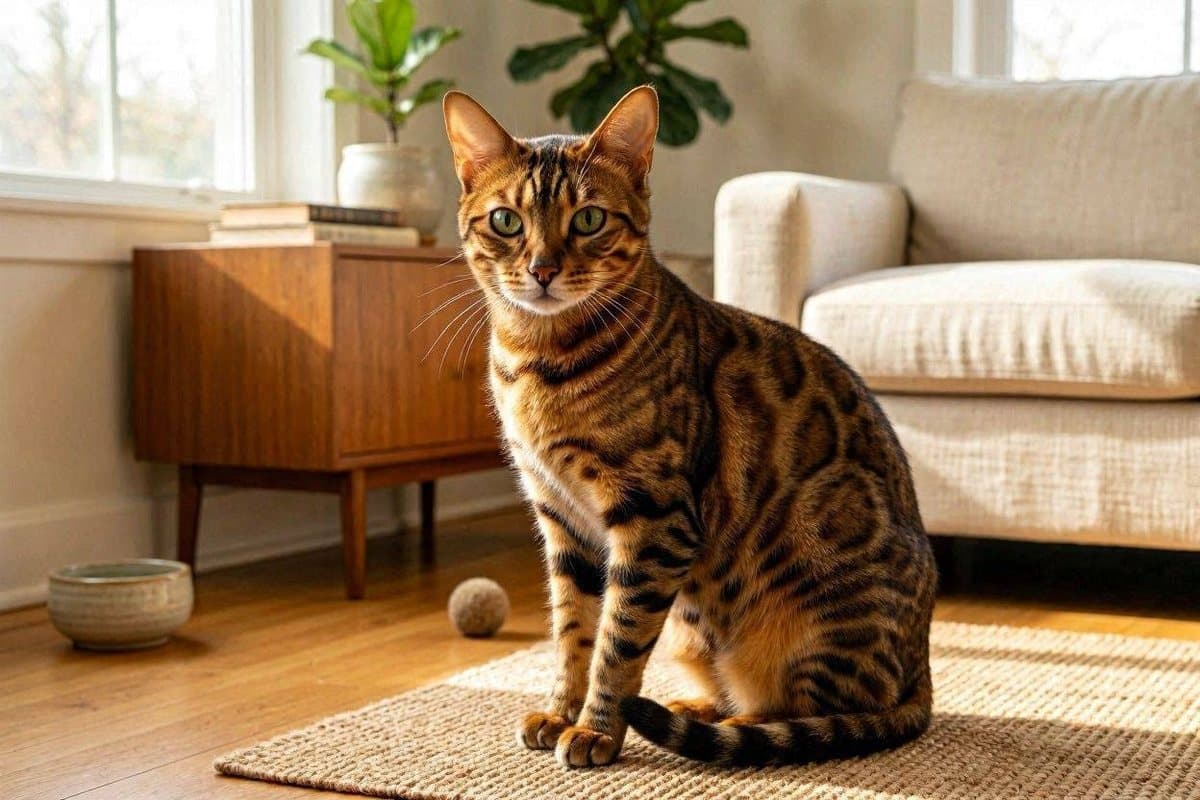
Bengal Cat at a glance
- Species
- Cat
- Size
- Medium–Large (8–15 lbs)
- Energy
- ●●●●●
- Shedding
- ●●●●●
- Grooming needs
- ●●●●●
- Apartment suitability
- ●●●●●
The Bengal wears a leopard's coat with an athlete's engine — the most physically capable housecat most people will ever meet.
Origin & History
The Bengal was developed starting in the 1960s and 70s by crossing domestic cats with the Asian leopard cat, a small wild feline native to South and East Asia, with the explicit goal of putting a wildcat's striking spotted or marbled coat on a cat suited to living indoors. Careful, generations-deep breeding programs bred the wild temperament back out while keeping the exotic look — modern pet Bengals (typically four or more generations removed from the wild ancestor, labeled F4 and beyond) are fully domestic cats. The breed gained formal recognition in the 1980s and has only grown more popular since, prized for a coat pattern unlike anything else in the domestic cat world.
Temperament
Confident, curious, and perpetually busy. Bengals investigate everything, open cabinets, learn door handles, and demand participation in household life rather than sitting on the sidelines of it. Affection comes on their terms and their schedule — this is a partner in adventure, not a lap ornament, though many Bengals do eventually settle into brief cuddle sessions once the day's exploring is done.
Energy: Plan for It
The defining trait: Bengals need vertical territory — tall cat trees, shelves, window perches — plus two or more genuine hunt-style play sessions daily and puzzle feeders as standard equipment, not optional extras. An under-stimulated Bengal becomes a destructive, yowling force of nature; most "bad Bengal" stories are really boredom stories with a different label. Our enrichment guide is a solid starting kit for building out a Bengal-proof activity routine.
Grooming & Shedding
The one genuinely easy part of Bengal ownership: the short, glittering pelt needs only occasional brushing and sheds lightly. Some Bengals also enjoy water play more than most cats — many will paw at running faucets, join a shower, or fish toys out of a water bowl, so a closed toilet lid and a water-resistant attitude toward bathroom time are useful.
Training
Exceptionally trainable for a cat: fetch, leash walking, tricks, and harness hikes are realistic goals with clicker methods. Training doubles as essential enrichment, giving that sharp brain a job and burning energy that would otherwise go into redecorating your shelves.
Health Considerations
Generally a robust, athletic breed; screened lines matter for hypertrophic cardiomyopathy (HCM) and progressive retinal atrophy (PRA), both DNA-testable in reputable breeding programs. High energy plus relentless curiosity means pet-proofing to a toddler standard — secured cords, locked cabinets, and no assumption that a closed door will stay closed. Most Bengals live 12 to 16 years with good care.
Living With Kids & Other Pets
Bengals generally do well with active, respectful kids who can play at their pace, though their intensity can overwhelm very young children. They typically do best with a companion — another energetic cat or a playful, cat-friendly dog — since a Bengal with nothing to chase, wrestle, or outsmart will find its own outlet, usually at 2 a.m.
Feeding Notes
That athletic build runs on real calories, and Bengals tend to stay lean and muscular even on a generous diet if they're getting enough exercise. Measured meals on a consistent schedule work better than free-feeding for a breed this driven by food puzzles and treat rewards — it keeps training effective and prevents the extra calories from turning into extra pounds on an otherwise athletic frame.
Is a Bengal Right for You?
For engaged owners who want an interactive, trainable, spectacular-looking companion and are willing to build their home upward for it — one of the most rewarding cats there is. First-time cat owners and anyone hoping for a low-key, hands-off pet should think twice; a bored Bengal in the wrong household is a genuinely difficult roommate. For a quiet lap cat instead of a live-in athlete, look at the Ragdoll instead.
Frequently Asked Questions
Are Bengals part wild cat?
The breed descends from Asian leopard cat crosses generations back. Pet Bengals (F4+) are fully domestic — with the athleticism turned up.
Do Bengals like water?
Famously yes — many play in faucets, join showers, and fish toys out of water bowls. Close the toilet lid.
Related Guides
Abyssinian Cat Breed Guide
Abyssinian temperament, energy and enrichment needs, grooming, and health considerations for one of the oldest cat breeds.
Turkish Angora Cat Breed Guide
Turkish Angora temperament, activity needs, silky coat care, and health notes for one of the oldest natural cat breeds.
Oriental Shorthair Cat Breed Guide
Oriental Shorthair temperament, vocal social nature, grooming, and care for this elegant, people-obsessed Siamese cousin.
Get one useful pet-care tip a week
No spam, unsubscribe anytime.